

Fusion Cooking Explained: The Science Behind Bold Flavor
By Habun · Sep 11, 2026 · Category: Food & Flavors
A pan of caramelizing onions smells nothing like the cumin toasting beside it, yet plated together they read as one dish instead of two competing ones. That instinct, knowing which flavors amplify each other and which cancel out, is the real engine behind fusion cooking. Kitchens across the UAE and beyond treat it less as a passing trend and more as an applied science, built on how molecules behave under heat, acid, and time.
Home cooks and curious diners often assume fusion is about mixing cuisines for novelty. It is closer to matching chemistry. A dish built on borrowed traditions still has to obey the same rules of taste, texture, and aroma that govern any single cuisine on its own, whether that cuisine is French, Keralan, or Emirati.
What Is the Chemistry Behind Flavor Pairing?
Flavor pairing rests on a handful of measurable reactions rather than guesswork. The best known is the Maillard reaction, the browning that happens when proteins and sugars meet high heat, producing hundreds of aroma compounds in the process. Researchers at the University of Naples have documented how this single reaction shapes color, texture, and taste across almost every heat-treated food, from seared meat to toasted bread crust.
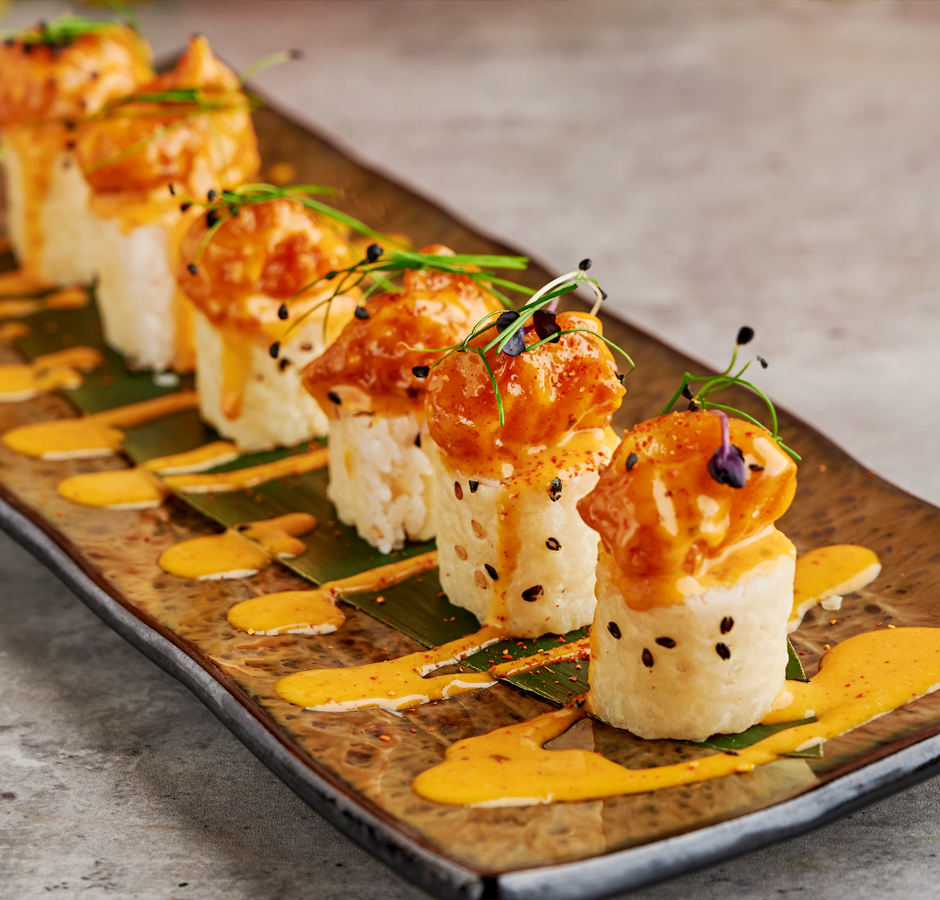
Umami works on a separate but related principle. A 2020 study published in Nature Scientific Reports found that pairings long considered instinctive, such as eggs with bacon or champagne with oysters, share a common thread of glutamate and nucleotide compounds that reinforce each other on the tongue. That same synergy explains why a Korean gochujang glaze can sit comfortably next to a French butter sauce. Both carry fermented, protein-rich notes that the palate reads as complementary rather than clashing.
How Acid, Fat, and Heat Shape Cross-Cultural Cuisine
Every regional cuisine leans on a signature balance of acid, fat, salt, and heat. Thai cooking favors lime and fish sauce against coconut fat. Mediterranean cooking leans on olive oil cut with citrus or vinegar. Fusion cooking works when a dish borrows the acid-to-fat ratio from one tradition and applies it to ingredients from another, rather than simply placing two cuisines on the same plate.
Cross-cultural cuisine gets technical fast once you start swapping components. Trade a lime for a lemon, and the acidity shifts by a measurable degree on the pH scale, changing how a sauce sets or how a marinade tenderizes protein. A cook who understands these mechanics can substitute with confidence. Someone guessing ends up with a dish that tastes assembled rather than composed, two ingredients sharing a plate without actually talking to each other.
Where Fusion Cooking Succeeds and Where It Falls Apart
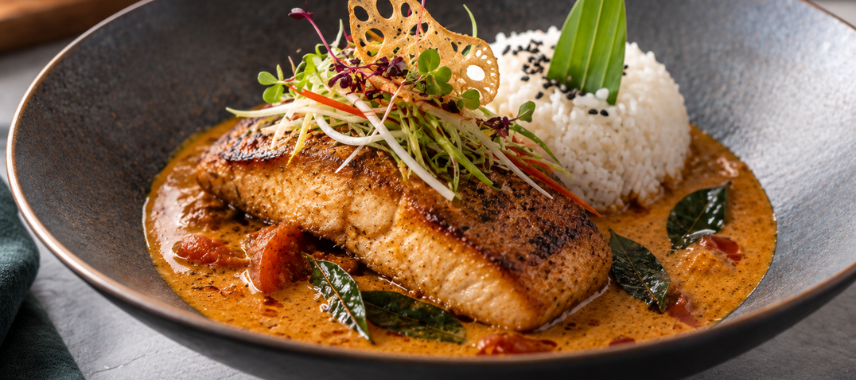
Fusion cooking succeeds when one element anchors the dish and everything else supports it. A Kerala fish curry base finished with a Japanese dashi stock works because both rely on umami-forward liquids; the technique changes but the flavor logic stays consistent. It falls apart when two dominant flavor systems compete for the same role, such as a heavily spiced curry paste layered under a butter-forward French reduction. The palate cannot register both as the lead note at once, and the result reads as confused rather than creative.
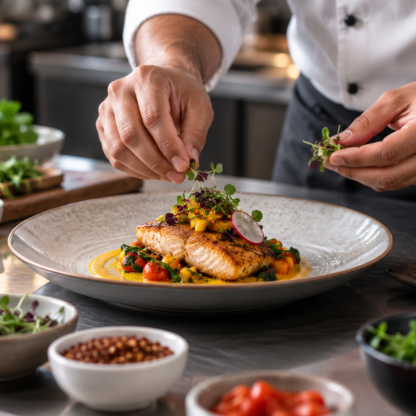
Restaurant kitchens test this constantly through small, deliberate substitutions rather than wholesale reinvention. A single swapped spice or cooking method is easier to evaluate than an entire dish rebuilt from two traditions.
Reading a Dish Before You Build One
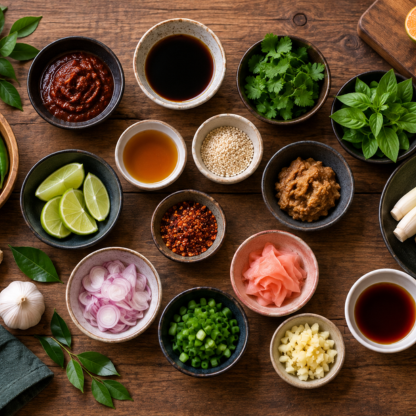
Before combining ingredients from different culinary backgrounds, it helps to break a dish down into its functional parts: the protein or base, the fat carrier, the acid, and the aromatic layer. Each part can be swapped independently. A cook can keep a French mother sauce technique but replace the aromatic base with lemongrass and ginger, and the dish still holds together because the fat and acid ratios stay intact.
Palate fatigue is a real risk here. Layering too many bold elements, three fermented sauces, two chili varieties, and a heavy dairy finish overwhelms the receptors that would otherwise register nuance. Restraint, more than ambition, tends to separate a balanced fusion dish from an overcrowded one.
Fusion Kitchens in the UAE Are Testing This Daily
The UAE's dining scene offers a working laboratory for these principles, given how many culinary traditions sit within a single city block. Habun, a restaurant operating in Sharjah and Ras Al Khaimah, describes its approach as blending international techniques with local ingredients rather than treating either as decoration for the other. That framing lines up with the chemistry above: technique from one tradition, ingredient logic from another, held together by a shared acid, fat, or umami base.
Final Thoughts
Fusion cooking rewards cooks who understand why a pairing works, not just that it does. Once the underlying chemistry becomes visible, so does the difference between a dish that feels invented and one that feels inevitable. Which combination have you been hesitant to try because you were not sure the flavors would hold together?